
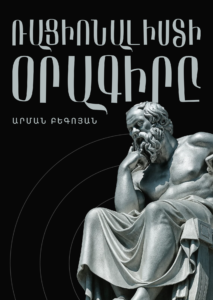
 A Rationalist’s Diary is more than just a book – it is an inner journey designed to accompany you throughout an entire year. Its structure allows you to move toward a more conscious, freer state of mind and way of life by reading only one or two pages a day. In these pages, rationalism is presented not merely as a philosophical doctrine but as a worldview and a way of living. The wisdom of Stoic philosophy, the practicality of Cognitive Behavioral Therapy, and the depth of neuroscience are woven into every entry. This unique combination will help you identify your automatic thoughts and irrational beliefs, understand the neurobiology and physiology of emotional reactions, uncover their true causes, and find a path toward restoring inner discipline and critical thinking – even in moments of the most intense emotions. This book is intended for those who wish to live without illusions, whether created by their own minds or by others, and for those who choose rationality as a cornerstone of life.
This book was born out of a need to reflect, understand, and rebuild. A Rationalist’s Diary is an attempt to integrate psychology, philosophy, psychotherapy, and neurobiology as practical tools for navigating the often confusing and sometimes discouraging situations and themes of everyday life. Modern people are burdened not only by responsibilities but also by information. In such conditions, reflection on one’s thoughts, emotions, and behavioral motivations is often pushed aside.
This book provides a comprehensive overview of anxiety and panic, worry and fear, intrusive thoughts, and their defining characteristics and main manifestations. It also examines the major types of anxiety and related disorders, presenting contemporary perspectives on their causes, development, and treatment.
The book discusses the computational model of anxiety, its neurobiological mechanisms, and evidence-based non-pharmacological approaches to treatment. In addition, it offers practical techniques for managing anxiety and anxiety disorders within the framework of Cognitive Behavioral Therapy (CBT), including cognitive and behavioral interventions that readers can apply in practice.
The book is intended for: researchers studying anxiety disorders and their psychotherapy; individuals who wish to overcome anxiety or an anxiety disorder independently and/or with the support of a mental health professional; mental health and allied professionals – including psychologists, psychotherapists, psychiatrists, neurologists, social workers, special education professionals, and others – who seek to help their clients and patients.
Anxiolytic: A Guide to Overcoming Anxiety Disorders is a substantially revised and expanded edition of the 2017 book Bye Bye Anxiety. The new edition contains three times more practical material, particularly cognitive and behavioral techniques, and is nearly twice the length of the original.
It also introduces several anxiety and related disorders that were not covered in Bye Bye Anxiety (such as selective mutism and illness anxiety disorder), includes a dedicated chapter on obsessive-compulsive disorder (OCD), features transcripts of therapeutic sessions, and significantly expands the theoretical sections throughout the book.
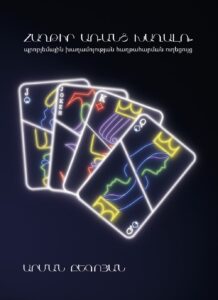
Win Without Playing: A Guide to Overcoming Problem Gambling presents the main types of gambling, as well as modern understandings of its causes, development, and overcoming strategies. It discusses non-pharmacological, psychotherapeutic methods of treating gambling addiction. The guide includes a cognitive-behavioral therapy (CBT) program designed to help overcome problem gambling. The book is intended both for individuals who wish to overcome their problem independently and/or with professional help, and for mental health and related professionals (psychologists, psychotherapists, psychiatrists, neurologists, social workers, special educators, and others) who aim to support their clients.
This guide is the result of many years of work with clients struggling with gambling, betting, and gaming-related problems, and is a logical continuation of the manuals “Pathological Gambling: A Psychotherapist’s Guide”, “Pathological Gambling: A Workbook” (Begoyan, 2015a, 2015b), and “Gambling: How to Overcome”(Begoyan, 2017). Unlike the previous manuals, however, this book attempts to combine and refine the content of both the psychotherapist’s guide and the client’s workbook into a single volume, suitable for both self-help and professional use. It also incorporates insights from 17 years of psychotherapeutic experience and the latest neuroscientific research.
Irvin D. Yalom, Professor Emeritus of Psychiatry at Stanford University and the author of numerous international bestsellers, is widely regarded as one of the most influential existential psychotherapists of our time. His works have been translated into dozens of languages and have inspired generations of psychotherapists around the world. Among his best-known books are When Nietzsche Wept, The Schopenhauer Cure, and The Spinoza Problem. Another of his landmark works is Staring at the Sun: Overcoming the Terror of Death, first published in 2008 and now presented to Armenian readers in translation.
In this book, Yalom develops his central theme through compelling stories from his therapeutic practice. Alongside these clinical narratives, he guides readers toward a deeper understanding and acceptance of the fundamental conditions of human existence. He encourages living fully and authentically by freeing ourselves from the fears that stand in the way—most notably, the fear of death.
Despite the profound seriousness of its subject, the book captivates readers from its very first pages. It not only offers practical psychological insight but also invites thoughtful reflection on some of life’s most fundamental existential questions.
General Characteristics of Interpersonal Relationships provides a comprehensive overview of interpersonal relationships, tracing their conceptual development from classical philosophical perspectives to contemporary psychological theories and interpretations.
It explores the major theories of interpersonal relationships, including Attachment Theory (covering both the mother–infant attachment model and the neurobiology of attachment), Social Penetration Theory, Uncertainty Reduction Theory, Relational Dialectics Theory, Fundamental Interpersonal Relations Orientation (FIRO) Theory, and George Levinger‘s Five-Stage Model of Relationship Development.
The book also examines interpersonal relationships within the broader contexts of social relations, communication, interpersonal interaction, and human activity, offering readers both theoretical foundations and an integrated psychological perspective.
It is intended for mental health and allied professionals—including psychologists, psychotherapists, psychiatrists, neurologists, social workers, special education professionals, and others—as well as university students in psychology and related disciplines.
Gambling: How to Overcome provides a comprehensive overview of the major forms of gambling disorder, as well as contemporary perspectives on its causes, development, and treatment. It examines evidence-based, non-pharmacological psychotherapeutic approaches to overcoming gambling disorder, with a particular emphasis on Cognitive Behavioral Therapy (CBT).
The book includes CBT-based assessment tools for evaluating gambling-related problems, along with a structured six-week recovery program designed to help individuals reduce and overcome problematic gambling behaviors.
It is intended both for individuals who wish to overcome gambling disorder independently and/or with the support of a mental health professional, and for mental health and allied professionals—including psychologists, psychotherapists, psychiatrists, neurologists, social workers, special education professionals, and others—who work with clients experiencing gambling-related difficulties.
Win Without Playing: A Guide to Overcoming Problem Gambling is a new, revised edition of this book.
A Concept and a Conceptual System explores the theory of concepts and the conceptual system, examining their nature, structure, and the processes through which concepts are formed, reorganized, and transformed. It also discusses the distinctive properties and manifestations of concepts within human cognition.
In addition, the book introduces the notions of conceptual compatibility, conceptual flexibility, and conceptual dissonance. It examines the content-related and process-oriented nature of conceptual dissonance and discusses maladaptive strategies that contribute to its persistence, as well as approaches to its correction and resolution.
The book is intended for researchers, students, and professionals interested in psychosemantics, cognitive linguistics, and cognitive science, as well as specialists working in related disciplines.
The Theory of Conceptual Systems, as a theory of personality, was first described by Harvey, Hunt, and Schroeder in 1961 (Harvey, Hunt, & Schroeder, 1961). Since then, the conceptual system has primarily been studied within the humanities and social sciences. In recent years, however, it has increasingly become a subject of investigation in the fields of cognitive science and neuroscience (Barsalou, 2008).
 Pathological Gambling
 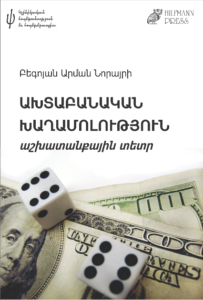 guide and accompanying workbook provide a comprehensive overview of the major forms of gambling disorder, as well as contemporary perspectives on its causes, development, and treatment. They examine evidence-based, non-pharmacological psychotherapeutic approaches to overcoming gambling disorder, with a particular emphasis on Cognitive Behavioral Therapy (CBT).
 #Bye_Bye_Anxiety covers primary types of anxiety and anxiety disorders, their causes, developmental trends and modern methods of treatment. The book discusses their neurocognitive models, neurobiological mechanisms and non-medicated methods of treatment, as well as the certain cognitive behavioural therapy techniques for anxiety and related disorders. This book aims at assisting people, who want to overcome their anxiety and anxiety disorders with or without professional help. It is also a useful guide for mental health specialists and professionals in treating patients in related fields (psychologists, therapists, psychiatrists, neurologists, social workers and educators). The book is the product of the author’s professional activities and personal experience.
This book is about anxiety and anxiety disorders, as well as ways of, let’s say, overcoming or treating them. Why “let’s say?” Because terms “overcome” and “treat” are more applicable when talking about illnesses or, for instance, an enemy, but not as much anxiety or even phobias. Is this surprising? You will naturally ask “then what is anxiety if not an illness, or, let’s say, an enemy, which definitely needs to be treated, defeated, overcome, and so on, and so forth?” And the specialist inside you will object. “Wait a second! Why, then, mental health guidebooks and manuals define those as disorders? Why do psychiatrists and neurologists even prescribe medicine for them?” However, my experience in counseling and psychotherapy constantly keep telling me something else louder and louder.
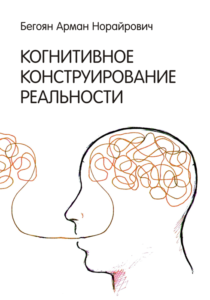
Cognitive Reality Construction: Three Techniques from Cognitive-Conceptual Therapy manual presents three techniques from Cognitive-Conceptual Therapy that can be applied across a wide range of clinical settings for the purpose of cognitive reality construction. These techniques are primarily intended to reduce anxiety, obsessive thoughts and compulsive behaviors, as well as symptoms of depression.
Cognitive reality construction is defined as the method and process of creating and/or modifying the cognitive model of a specific segment of reality- including past events and anticipated future situations—through the deliberate use of cognitive and emotional processes.
This work is an attempt to present the concept of cognitive reality construction in a clear, concise, and practical manner. It demonstrates cognitive reality construction in action through three therapeutic techniques that were developed by the author during years of clinical and psychotherapeutic practice, and subsequently refined and enhanced through collaboration with professional colleagues.
Designed as a practical resource, this manual provides mental health professionals with structured, evidence-informed therapeutic techniques that can be readily integrated into psychological assessment and psychotherapy, while also serving as a valuable reference for students and researchers interested in innovative cognitive approaches to psychological intervention.
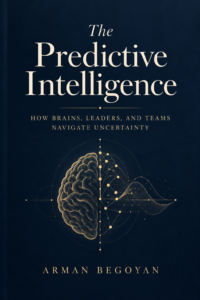
The book explores how predictive neuroscience, psychology, artificial intelligence, and organizational behavior can help us understand decision-making in an increasingly uncertain world. Moving from the predictive brain to executive judgment, human-AI collaboration, psychological safety, and organizational learning, the book argues that intelligence is not simply the ability to make better predictions. It is the ability to recognize uncertainty, detect when our models are failing, and update without losing the capacity to act.
Written for leaders, professionals, and organizations navigating rapid technological change, The Predictive Intelligence offers a practical framework for making better decisions, using AI without surrendering judgment, and building organizations that remain adaptive when reality refuses to follow the plan.
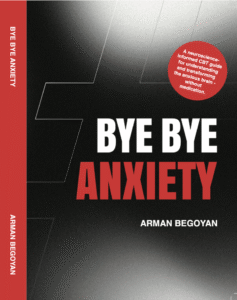 #Bye_Bye_Anxiety covers primary types of anxiety and anxiety disorders, their causes, developmental trends and modern methods of treatment. The book discusses their neurocognitive models, neurobiological mechanisms and non-medicated methods of treatment, as well as the certain cognitive behavioural therapy techniques for anxiety and related disorders. This book aims at assisting people, who want to overcome their anxiety and anxiety disorders with or without professional help. It is also a useful guide for mental health specialists and professionals in treating patients in related fields (psychologists, therapists, psychiatrists, neurologists, social workers and educators). The book is the product of the author’s professional activities and personal experience.